Starlight Cameras: What It Is, How It Works, Best Picks & More
Why Night Security Cameras Often Fail After Dark
Many homeowners install security cameras expecting them to work equally well during the day and at night. In reality, night monitoring is where many cameras struggle.
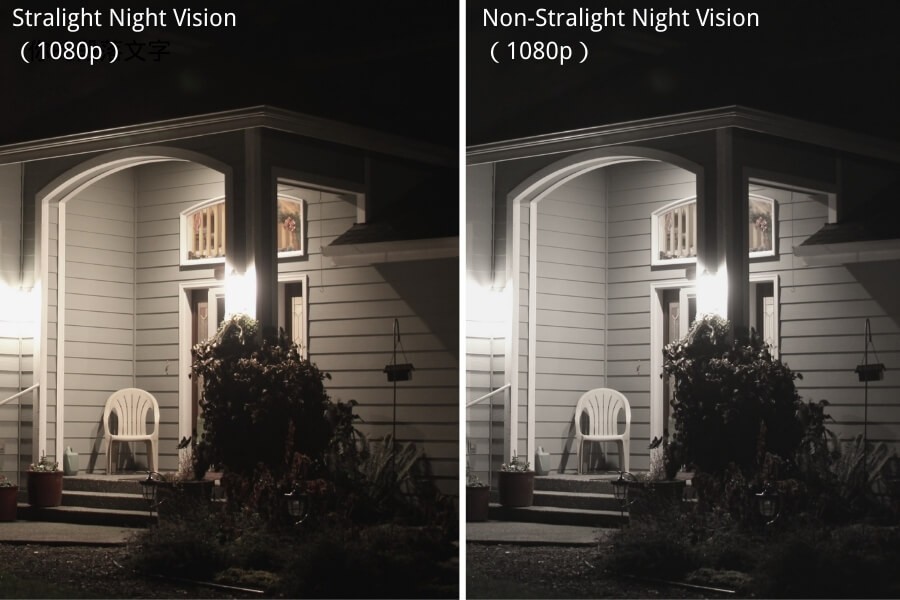
Traditional cameras often produce blurry black-and-white images at night. Important details such as facial features, clothing color, or movement direction may become difficult to identify.
Starlight cameras were developed to address this limitation. They are designed to capture clear images in extremely low-light environments without relying entirely on infrared illumination.
What Is a Starlight Security Camera
A starlight camera is a security camera designed to capture usable images in very low lighting conditions. These cameras can operate in environments with illumination levels as low as 0.01 Lux or even lower.
Unlike traditional cameras that rely mainly on infrared LEDs, starlight cameras use advanced sensors and optical systems to capture available ambient light.
This allows the camera to produce clearer images and sometimes retain color in environments such as dim indoor rooms, hallways, or outdoor areas illuminated only by streetlights or moonlight.
The Technology Behind Starlight Cameras
Image Sensors: The Core of Low-Light Capture
The image sensor acts as the camera’s visual sensor. Larger sensors can capture more light, which improves image clarity in dark environments.
Starlight cameras often use larger sensors such as 1/1.8" or similar sizes. These sensors collect more photons from available light sources.
Modern models typically use back-illuminated CMOS sensors, which allow more light to reach the sensing layer. This design significantly improves sensitivity in low-light conditions.
Lens Aperture: Allowing More Light Into the Camera
The lens aperture determines how much light enters the camera. A larger aperture allows more light to reach the sensor.
Starlight cameras often use lenses with apertures such as F1.0 or F1.2. These large apertures allow the camera to capture faint ambient light that would otherwise be invisible to standard cameras.
When a large sensor and large aperture lens work together, the camera can produce clearer images even in dim environments.
Understanding Lux and Low-Light Performance
Low-light performance is commonly measured using a unit called Lux, which describes how much visible light is present in an environment.
The lower the Lux value, the darker the environment becomes.
Examples of typical lighting levels include:
- Direct sunlight — about 100,000 Lux
- Indoor lighting — about 300–500 Lux
- Street lighting at night — about 10–20 Lux
- Full moon — about 0.1 Lux
- Moonless night with starlight — about 0.001 Lux
Human vision begins to struggle when lighting falls below about 20 Lux. Recognizing faces or identifying objects becomes difficult.
Starlight cameras are designed to function in lighting conditions as low as 0.01 Lux, which allows them to capture images even when the human eye sees very little detail.
How Starlight Cameras Compare to Other Night Vision Technologies
Starlight vs Traditional Infrared Night Vision
Traditional infrared cameras rely on infrared LEDs to illuminate the scene. Because infrared light is invisible to the human eye, these cameras typically produce black-and-white images.
Starlight cameras rely mainly on available ambient light. When light is present, they can capture clearer images and sometimes preserve color information.
Infrared cameras remain effective in complete darkness because they generate their own illumination.
Starlight vs Color Night Vision With Spotlights
Some security cameras achieve color night images by turning on a built-in spotlight or floodlight.
This method can produce color images even in very dark environments. However, the additional lighting may disturb residents or reveal the camera’s location.
Starlight cameras operate more quietly because they rely on existing light sources. They consume less power and avoid creating additional light pollution.
Pros and Cons of Starlight Cameras for Home Security
Advantages
- Clearer images in low-light environments
- Ability to retain color when some ambient light is available
- Less reliance on infrared LEDs or floodlights
- Suitable for indoor monitoring areas such as living rooms, hallways, and entrances
Limitations
- Performance depends on the presence of some environmental light
- Color recording may switch to black-and-white in extremely dark environments
- High-sensitivity sensors may increase cost compared to basic cameras
How to Choose the Right Starlight Camera for Your Home
Selecting the right camera depends on where and how the device will be used.
Identify the Installation Location
Different locations require different features.
For example:
- A living room may benefit from a pan-tilt camera with wide coverage
- A hallway or entrance may only require a fixed viewing angle
Users who move frequently may prefer wireless cameras that are easy to install and relocate.
Understand the Key Specifications
Important specifications to review include:
- Resolution — 2MP or higher is recommended for clearer details
- Sensor sensitivity — larger sensors improve low-light performance
- Lens aperture — smaller F-numbers indicate larger apertures
- AI detection features — human detection can reduce false alerts
- Storage options — local SD card storage or cloud backup
These features help ensure the camera performs reliably in daily use.
Consider Installation Simplicity
Many home users prefer cameras that can be installed without professional assistance.
Wireless cameras that support plug-and-play setup and mobile app control simplify the installation process and reduce setup time.
Recommended Indoor Starlight Cameras for 2025
Several indoor cameras integrate starlight technology with convenient home monitoring features.
For example, a suitable option may include:
Home Vision Pro
Designed for full-room monitoring.
This type of camera may include 3MP resolution, pan-tilt rotation, and starlight night performance for improved visibility in dim environments.
Home Vision Magnet
Compact models with magnetic mounting bases allow flexible placement on metal surfaces such as shelves or appliances.
These cameras are useful for users who want easy installation without permanent mounting.
Home Vision Care
Some models focus on caregiving scenarios.
These devices may include two-way audio, motion alerts, and emergency notification features, allowing family members to monitor elderly relatives, children, or pets remotely.
Home Vision Core
Entry-level starlight cameras provide essential features such as 2MP resolution, Wi-Fi connectivity, and local storage support.
These models allow users to experience starlight night monitoring without requiring advanced system installation.
FAQ
Can starlight cameras see in complete darkness?
No. Starlight cameras rely on some ambient light such as moonlight or street lighting. When the environment becomes completely dark, most cameras automatically switch to infrared night vision so the scene can still be recorded clearly.
Do starlight cameras record in color at night?
Yes. When some environmental light is available, starlight cameras can capture color images at night. In very dark environments, the camera may switch to black-and-white mode to maintain image clarity.
How far can a starlight camera see at night?
The viewing distance depends on the sensor sensitivity, lens quality, and available lighting conditions. In typical residential environments, starlight cameras can clearly monitor rooms, yards, or entrances when some ambient light is present.
Are starlight cameras better than infrared cameras?
Starlight cameras perform well in low-light environments and may retain color information. Infrared cameras perform better in complete darkness because they generate their own illumination using infrared LEDs.
How do starlight cameras work?
Starlight cameras use high-sensitivity sensors, large-aperture lenses, and image processing technology to capture extremely small amounts of light. These components work together to produce visible images in very dim environments.
Final Thoughts on Starlight Camera Technology
Starlight camera technology improves the ability of security systems to capture useful images in low-light environments.
By combining sensitive sensors, large-aperture lenses, and modern image processing, these cameras allow homeowners to monitor spaces that traditional night-vision cameras may struggle to capture clearly.
Understanding how starlight cameras work helps users choose equipment that fits their monitoring needs and installation environments.