What Is an IP Streaming Encoder? 2026 Full Guide
Introduction
An IP streaming encoder is a key technology behind modern video and audio transmission. It converts raw media signals into compressed data and sends them through IP networks such as the internet or a local network.
As 4K and 8K video become more common and real-time interaction grows in importance, the role of encoding technology continues to expand.
From large live events to home security monitoring, IP streaming encoders work behind the scenes to deliver smooth and reliable video experiences.
What Is an IP Streaming Encoder
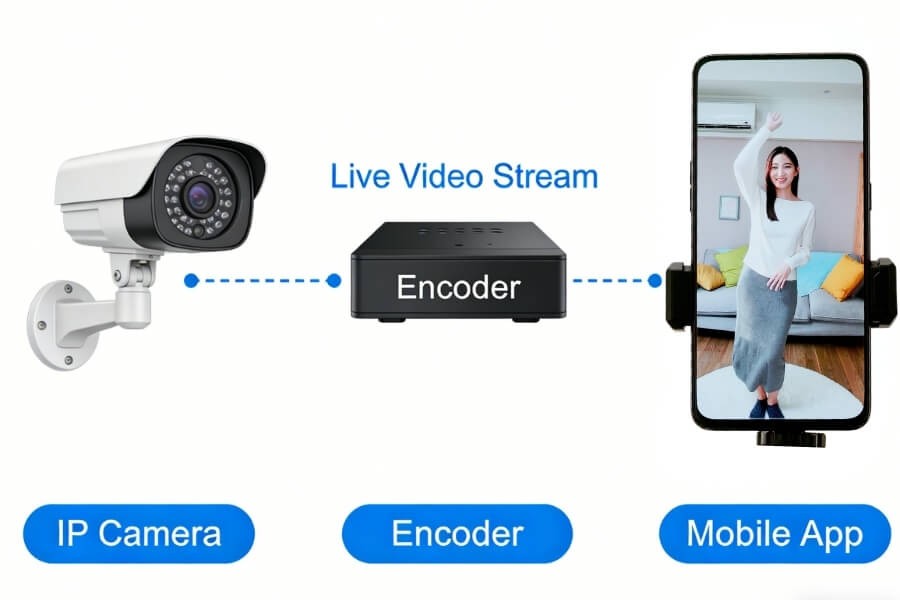
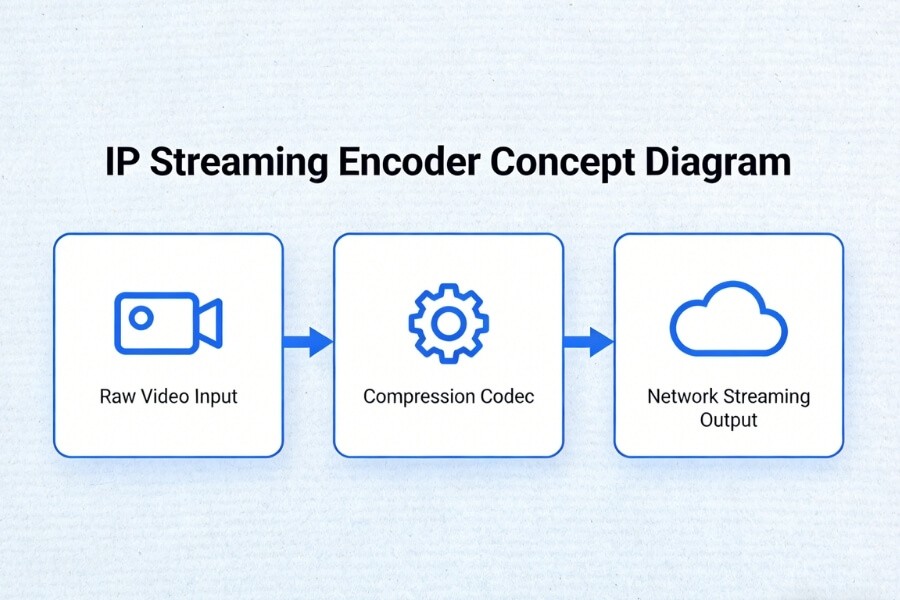
An IP streaming encoder is a hardware device or software application that converts raw audio and video into compressed digital streams that can be transmitted through IP networks.
The encoder receives signals from sources such as cameras or microphones. It compresses the data using video codecs and packages the stream into formats that can be delivered across networks.
Core Functions
IP streaming encoders perform several essential tasks:
- Compress raw video and audio to reduce bandwidth usage
- Package media streams using streaming protocols such as RTMP or HLS
- Maintain stable transmission quality across varying network conditions
- Support adaptive bitrate streaming for smoother playback
Common Input Sources
Encoders can receive video from several types of sources, including:
- IP cameras
- HDMI or SDI capture devices
- media files stored locally
These sources are converted into digital streams suitable for transmission across IP networks.
Types of IP Streaming Encoders
IP streaming encoders generally fall into two categories: hardware encoders and software encoders.
Hardware Encoders
Hardware encoders are dedicated devices designed specifically for video encoding.
They use specialized processing chips to handle compression tasks. This approach ensures stable performance and low latency.
Common characteristics include:
- reliable operation for long broadcasts
- support for professional video inputs such as HDMI or SDI
- consistent performance under high workloads
Hardware encoders are commonly used for professional broadcasting, large live events, and commercial streaming environments.
Software Encoders
Software encoders run on general-purpose computers.
Programs such as OBS Studio process audio and video streams using the host system's CPU or GPU.
Advantages include:
- lower initial cost
- flexible configuration
- regular software updates
However, performance depends on the hardware capabilities of the host system. Heavy workloads can affect encoding stability.
Choosing Between Hardware and Software
The choice depends on the intended use case.
Home users or small streaming setups often rely on software encoders. Professional environments typically prefer hardware encoders for stability and low latency.
How IP Streaming Encoders Work
IP streaming encoders process video using several technologies that work together to deliver media over a network.
These technologies include compression algorithms, streaming protocols, and adaptive bitrate control.
Video Compression Methods
Video compression reduces the size of media data while preserving visual quality.
H.264 / AVC
H.264 is one of the most widely used video codecs.
It offers good compatibility across devices and provides efficient compression at moderate bitrates. This makes it suitable for live streaming and video conferencing.
H.265 / HEVC
H.265 provides significantly higher compression efficiency compared to H.264.
It can reduce bandwidth usage by around 40 percent while maintaining similar visual quality. This makes it suitable for 4K and ultra-high-definition video.
Emerging Codecs
Newer compression technologies are also gaining adoption.
Examples include:
- VP9
- AV1
These codecs offer improved efficiency but may require more processing power.
Streaming Protocols Used for IP Video
Streaming protocols define how encoded media is delivered across networks.
RTMP
Real-Time Messaging Protocol was widely used during the Flash streaming era.
Today it is commonly used to send video streams from encoders to media servers.
RTSP
Real-Time Streaming Protocol is frequently used in IP camera systems.
It allows devices to control playback actions such as play, pause, and stop.
HLS
HTTP Live Streaming is a widely supported streaming protocol developed by Apple.
It delivers video using HTTP segments and supports adaptive bitrate streaming. Typical latency ranges from 10 to 12 seconds.
WebRTC
WebRTC enables real-time communication with extremely low latency.
Delays are often below 0.5 seconds, which makes the protocol suitable for interactive applications such as video conferencing or remote control systems.
CMAF and DASH
CMAF combined with DASH provides a modern streaming framework.
It improves delivery efficiency and reduces latency to approximately 3 to 5 seconds.
Adaptive Bitrate Streaming
Adaptive Bitrate Streaming (ABR) helps maintain smooth playback under changing network conditions.
The encoder generates multiple versions of the video at different bitrates. The player automatically selects the most suitable stream based on the available bandwidth.
This approach reduces buffering and maintains consistent viewing quality.
ABR is commonly used with protocols such as HLS and DASH.
Common Uses of IP Streaming Encoders
IP streaming encoders support many real-world applications where reliable video transmission is required.
Live Event Streaming
Large events such as sports competitions, concerts, and conferences rely on encoders to transmit video signals from the venue to online platforms or content delivery networks.
Encoders compress the captured video and send it to distribution platforms where viewers can watch the event in real time.
Video Conferencing and Remote Collaboration
Modern collaboration tools depend on efficient video encoding.
Encoders compress the audio and video streams to ensure synchronized communication between participants in different locations.
This allows businesses to hold meetings, training sessions, and presentations remotely.
Security and Surveillance Systems
IP streaming encoders also play an important role in video surveillance systems.
In a typical surveillance workflow, an IP camera captures video and encodes the footage before transmitting the data through the network. The encoded stream is then sent to a network video recorder (NVR), cloud platform, or monitoring application where users can view the video remotely.
For example, indoor wireless cameras such as the RusinVision Home Vision Core series include built-in encoding capabilities. These cameras encode high-definition video and transmit the stream through Wi-Fi to a mobile application.
Users can then view their home environment remotely from a smartphone.
Typical features include:
- wireless Wi-Fi connectivity
- 2MP or 3MP high-definition resolution
- 360-degree pan-tilt monitoring
- infrared or full-color night vision
- AI human detection
- two-way audio communication
- local storage via microSD cards up to 128GB
Such devices are suitable for homes, apartments, and rental properties where quick installation and remote access are important.
Online Education
Educational institutions use IP streaming technology to deliver lectures and training sessions.
The encoder converts classroom video into digital streams that students can watch in real time or replay later.
This supports remote learning environments and large virtual classrooms.
Remote Healthcare and Industrial Monitoring
High-reliability encoders are also used in specialized environments.
Examples include:
- remote medical consultation and surgical broadcasting
- industrial inspection and equipment monitoring
- technical support for remote facilities
These scenarios require stable video transmission and minimal delay.
Important Streaming Terms
Understanding a few technical terms can make streaming systems easier to configure and manage.
Frame Rate (FPS)
Frame rate refers to the number of images displayed each second in a video stream.
Higher frame rates produce smoother motion in fast-moving scenes.
Bitrate
Bitrate represents the amount of data transmitted each second.
Higher bitrates generally provide better video quality but require more bandwidth.
Codec
A codec is the algorithm used to compress and decompress audio or video.
Common examples include H.264 and AAC.
Protocol
A protocol defines the rules used to transmit data between devices.
Examples include RTMP, RTSP, and HLS.
Adaptive Bitrate (ABR)
Adaptive bitrate technology allows video quality to adjust dynamically based on network conditions.
The player selects the most appropriate stream to prevent buffering and maintain stable playback.
FAQ
Do you need an encoder to live stream?
Yes. Raw video and audio signals are too large to transmit directly across the internet. A streaming encoder compresses the media using video codecs and converts it into a format suitable for network delivery. Without encoding, live streaming platforms would struggle to deliver stable video playback to viewers.
What does an IP streaming encoder do?
An IP streaming encoder converts raw audio and video signals into compressed digital streams that can travel through IP networks. It reduces bandwidth usage, packages the video using streaming protocols, and ensures the media can be transmitted to servers, cloud platforms, or monitoring systems efficiently.
Which is better, a hardware encoder or a software encoder?
Hardware encoders use dedicated processing chips and provide stable performance with lower latency. They are commonly used for professional broadcasts and long streaming sessions. Software encoders run on computers and offer flexibility and lower cost, making them suitable for personal streaming and small production setups.
What protocols do IP encoders support?
Most IP streaming encoders support common streaming protocols such as RTMP, RTSP, HLS, and WebRTC. Each protocol serves different purposes. RTMP is often used for sending streams to servers, RTSP is common in IP camera systems, and HLS or WebRTC are frequently used for video playback.
What is the difference between H.264 and H.265?
H.264 is widely supported and works well across most devices and streaming platforms. H.265 provides higher compression efficiency and can reduce bandwidth usage while maintaining video quality. However, it requires more processing power and may not be supported by older hardware or software systems.
How should a home surveillance system handle encoding?
Many modern security cameras include built-in video encoding functions. Cameras such as RusinVision indoor wireless models encode video directly inside the device and transmit the stream over Wi-Fi. This removes the need for external encoding equipment and allows users to monitor their homes through mobile applications.
Conclusion
IP streaming encoders are essential components in modern audio and video transmission systems.
They convert raw media signals into compressed streams that can be delivered through IP networks with reliable quality and manageable bandwidth usage.
Different applications such as live broadcasting, video conferencing, surveillance, and online education require different encoding approaches and streaming protocols.
For home users, smart security cameras with integrated encoding functions can simplify deployment. Devices such as RusinVision wireless cameras allow users to monitor their homes remotely without complex system configuration.
In modern security systems, encoding technology enables cameras to deliver reliable monitoring across homes, businesses, and remote environments.
As streaming technologies continue to evolve, IP encoders will become more efficient and intelligent, supporting higher resolutions and more responsive real-time communication.