Best Wide-Angle Security Cameras Buying Guide 2026: Your Complete Indoor Monitoring Solution
In 2026, choosing the right security camera for your home or small commercial space no longer requires complicated wiring and expensive systems. Advancements in technology, particularly the rise of wireless Wi-Fi cameras and wide-angle lenses, have made simple and smart home security more accessible than ever. This guide gathers the industry’s finest to help you understand how to use wide-angle smart indoor cameras to achieve maximum coverage with minimal equipment, creating a hassle-free home security system.
Why It’s Time to Rethink Your Security Cameras in 2026
Traditional security solutions often had narrow fields of view, leading to blind spots. Today’s modern living requires smarter, more integrated solutions.
From “Recording” to “Perception” Evolution
Cameras today are no longer just recording devices. With the help of AI, they can proactively identify people, vehicles, and pets, filtering out irrelevant alerts (like lighting changes), and truly provide "smart indoor monitoring."
The Rise of Wireless and Easy Installation
Gone are the days of complicated wiring setups. Wireless home cameras are as easy to install as setting up a smart speaker, making them ideal for average homeowners, renters, and apartment dwellers. These cameras offer real plug-and-play solutions.
The Core Value of Wide-Angle Lenses
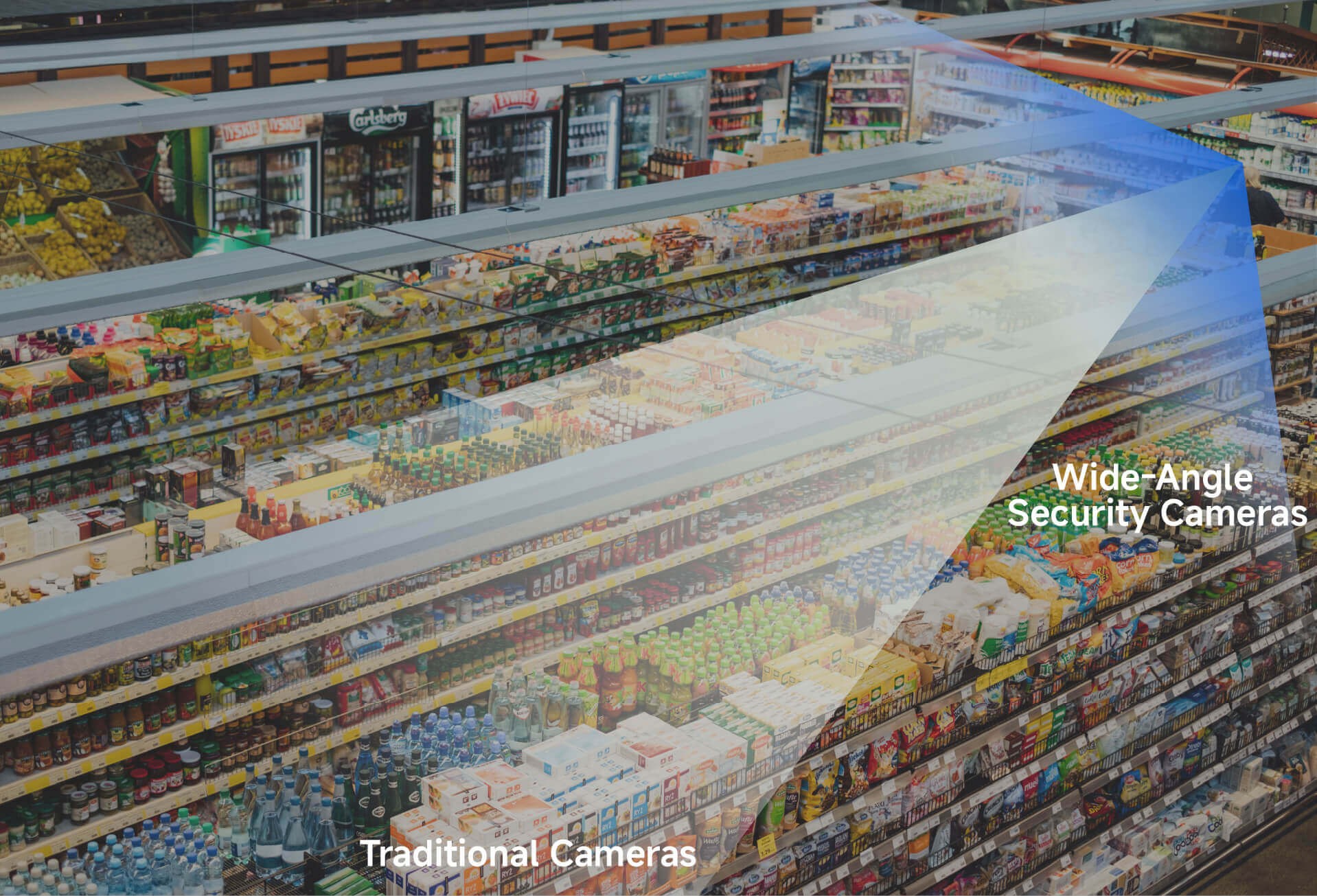
Wide-angle lenses are the key to reducing equipment numbers and lowering total costs. A well-designed wide-angle camera can cover 2-3 times the area of traditional cameras, allowing you to monitor the entire living room, kitchen, or entryway with just one device.
How to Choose the Best Wide-Angle Camera: Key Features to Consider
1. Field of View (FOV)
The field of view defines the width of the scene that the camera can capture, usually measured in degrees.
What to Look For:
- Wide-Angle Threshold: The industry commonly considers cameras with a horizontal FOV of ≥ 100° as “wide-angle.” For home indoor security, a FOV between 110°–130° is sufficient to cover most rooms.
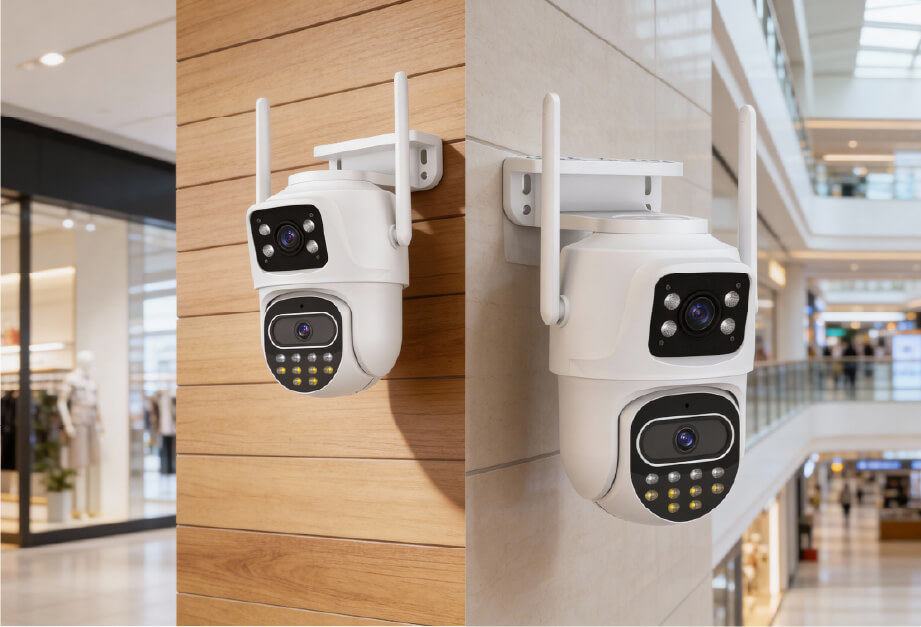
- Panoramic and Multi-Lens Solutions: If you need to cover an open space (like a living room + dining room), consider 150°–180° panoramic lenses or dual-lens stitching technology for seamless, no-blindspot monitoring.
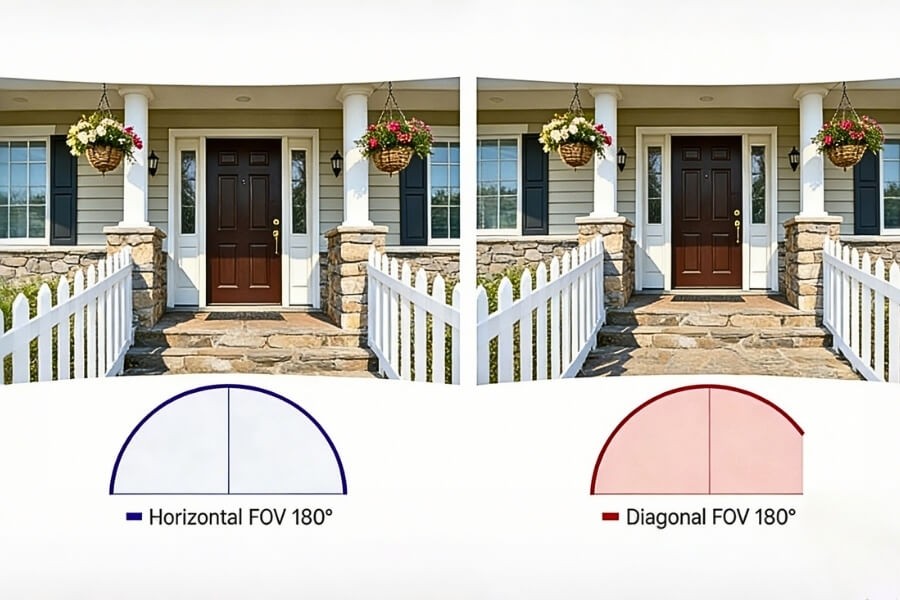
- Note on FOV: Some brands advertise the diagonal FOV, which can be misleading. Always verify the "horizontal FOV" on the spec sheet before purchasing.
2. Resolution and Image Quality
The core challenge: wide angles mean pixels are spread across a larger area, potentially sacrificing local details.
What to Look For:
- Basic Standard: For typical home monitoring, 2MP (1080p) to 3MP resolution is sufficient for wide-angle coverage.
- Detail Needs: For clearer identification of distant people, faces, or objects (e.g., for caretaking scenarios), select a model with higher resolution (like 4MP+) while maintaining quality even across a wider FOV.
Our Solution: For instance, our Home Vision Pro series provides 130° wide-angle coverage while maintaining 3MP HD resolution, ensuring clear edges with no loss of quality.
3. Night Vision: Eyes in the Dark
Types:
- Infrared Night Vision: Silent and discreet, providing black-and-white images.
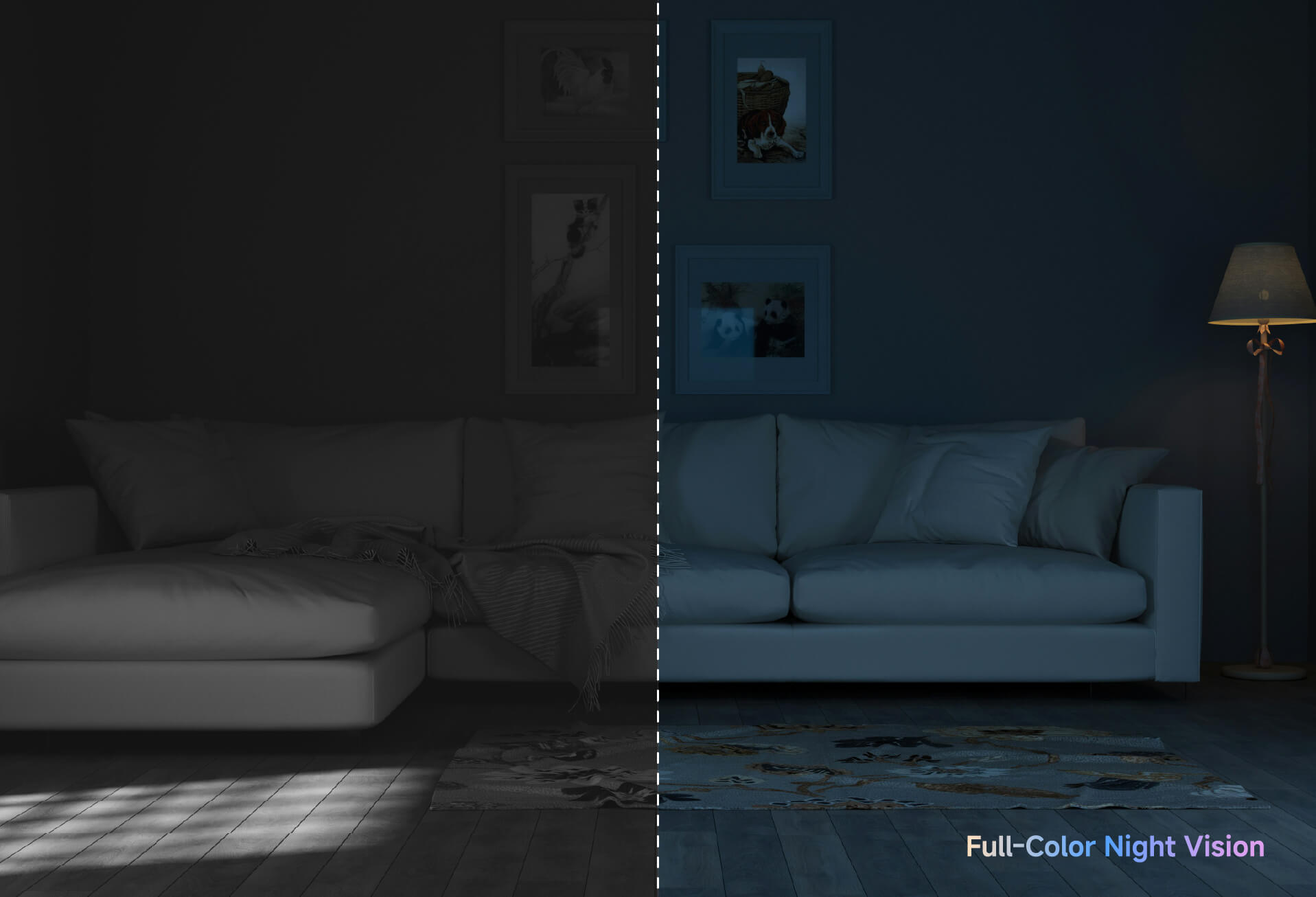
- Full-Color Night Vision: With enhanced lighting or larger aperture sensors, full-color night vision provides more detailed and informative visuals in low-light environments.
What to Look For:
Full-color night vision can be particularly useful for distinguishing details like clothing or toys, which enhances caretaking and event review experiences. Choosing cameras with switchable infrared/full-color modes offers greater flexibility.
4. AI Features: From Passive Recording to Active Alerts
Core Functionality: AI human detection is the most useful and necessary feature, helping reduce false alarms caused by pets, flying insects, or shadow changes.
Advanced Features: Some high-end models support vehicle detection, abnormal sound recognition (such as glass breaking or baby crying), and even specific behavior analysis (like fall detection).
Why AI Matters: AI ensures you only receive important alerts, saving you time from unnecessary video review—core to a "hands-off home security" experience.
5. Storage, Installation, and Connectivity
Storage Options:
- Local SD Card Storage: No ongoing monthly fees, and high privacy, making it the most popular solution for home users. Supports loop recording and is plug-and-play.
- Cloud Storage: Data security is higher (even in case of theft), with extended retrieval periods. However, cloud storage often requires a subscription.
Installation Flexibility:
- Wireless Wi-Fi Connectivity: Enjoy total freedom from cables, placing the camera where it’s most effective.
- Pan & Tilt: With a wide-angle lens, pan-and-tilt cameras offer 360° horizontal rotation and vertical adjustment, allowing full room coverage with just one device.
- Magnetic Base Designs: These simplify installation and adjustment, making setup quick and easy.
Which Wide-Angle Camera Is Right for You? Our Top Picks for Every Need
| Use Case | Key Features | Product Type Recommendation |
|---|---|---|
| Full Home Basic Monitoring | Medium wide-angle (~120°), AI human detection, two-way audio, infrared night vision | Basic cloud camera (e.g., Home Vision Core) |
| High-Resolution Monitoring | High-definition (3MP+), full-color night vision, large FOV, local storage | High-performance fixed camera (e.g., Home Vision Ultra) |
| Flexible Mobility Monitoring | Pan & tilt, AI tracking, portable magnetic installation, one-click communication | Pan & tilt magnetic camera (e.g., Home Vision Magnet) |
| Elderly/Child Monitoring | Cry detection, SOS button, full-color night vision, movement tracking | Care-focused model (e.g., Home Vision Care) |
10 Easy Tips to Get the Most Out of Your Wide-Angle Camera
- Install at Higher Locations: Mount cameras in corners or higher up to cover the widest area.
- Use Pan & Tilt: If your camera supports pan-and-tilt, use it to regularly scan or set a patrol route for dynamic coverage.
- Avoid Backlighting: Don’t place the camera directly against windows or bright light sources to avoid overexposure.
- Ensure Stable Wi-Fi: Wireless cameras depend on Wi-Fi strength—ensure the signal is strong at the installation point.
- Enable AI Detection Zones: Use your app to set specific detection zones (e.g., at the door or crib) to reduce false alerts.
- Clean the Lens Regularly: Dust on wide-angle lenses is more noticeable, so keep the lens clean to avoid blurry footage.
- Test Under Different Lighting Conditions: Test the night vision and image quality in different environments—daytime, nighttime, and with lights on.
- Make Use of Two-Way Audio: Use the two-way communication feature not just for interaction but also as a deterrent.
- Choose Appropriate Storage: Pick SD cards (e.g., 128GB) based on how frequently you need to record footage.
- Update Firmware Regularly: Keep your camera’s firmware up to date to enhance performance and receive new features.
FAQ
Can wireless cameras be hacked easily?
Choose trusted brands that use advanced encryption methods (e.g., WPA3, TLS). Always set a strong password for your Wi-Fi and regularly update your camera’s firmware to ensure security.
Can one wide-angle camera replace multiple standard cameras?
Yes, in most open indoor spaces, a wide-angle camera with pan-and-tilt can cover more area than two or three fixed cameras. However, for monitoring multiple independent rooms, you will need additional cameras.
Do indoor cameras need to be waterproof?
Indoor cameras generally don’t require waterproofing, but if installing in humid areas like kitchens or bathrooms, choose models with moisture protection to ensure durability.
Local storage (SD cards) vs. cloud storage — which is better?
Local storage offers no ongoing fees and better privacy, while cloud storage provides higher security and easy access, but often requires a subscription. The ideal choice is a camera supporting both options.
How do I choose a camera for monitoring elderly individuals?
Look for features like SOS buttons, clear full-color night vision, fall detection, and simple remote access via a user-friendly app for family monitoring.
Final Thoughts: Building a Smarter, Simpler Home Security System
In 2026, home security is all about smart, simple solutions. Choosing the right wide-angle smart indoor camera means you’re selecting not just a piece of hardware, but an easy-to-install, plug-and-play security system. It should blend seamlessly into your life, providing clear views, intelligent alerts, and reliable protection when needed, while staying quietly in the background most of the time.
We hope this guide, which integrates the latest industry trends and practical advice, helps you make an informed choice and easily build your own smart, secure home.