7 Ways to Tell the Difference Between Real and Fake Security Camera
Introduction: Understanding Real vs. Fake Security Cameras
Fake security cameras, also known as dummy or decoy cameras, are non-functional devices designed primarily for visual deterrence. These cameras are meant to make potential intruders believe they are being watched, but they do not capture footage or provide any real security functionality.
In contrast, real security cameras offer full surveillance capabilities including recording, storage, remote viewing, intelligent alerts, and night vision. As technology advances, fake cameras have become increasingly sophisticated, making it more challenging to distinguish them from actual functional cameras. However, professional criminals can still spot the differences with a keen eye.
In this blog post, we'll walk through seven ways to easily differentiate between real and fake security cameras, helping you ensure that you are fully protected by a reliable surveillance system.
Spotting the LED Lights: Real vs. Fake Cameras
Real Cameras:
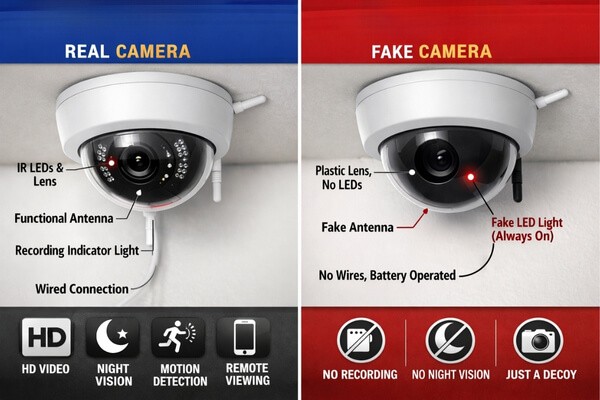
- Equipped with infrared (IR) lights for night vision, these lights are often soft and invisible to the naked eye or appear as faint red dots.
- The lights automatically turn on in low-light conditions and will not blink or flash constantly.
Fake Cameras:
- Fake cameras may lack real infrared lights or use excessively bright, constantly flashing red lights that mimic operational status.
- These lights are a major giveaway, as real cameras don’t usually feature flashing red lights throughout the day or night.
Pro Tip: If you’re considering investing in security cameras, look no further than RusinVision’s Home Vision Core series. These cameras feature infrared night vision, ensuring you get clear footage even in complete darkness, without giving away the camera’s presence with distracting lights. With Home Vision Core, you can easily monitor your home 24/7, keeping your family safe and informed in real-time.
How to Tell by the Camera’s Build and Material
Real Cameras:
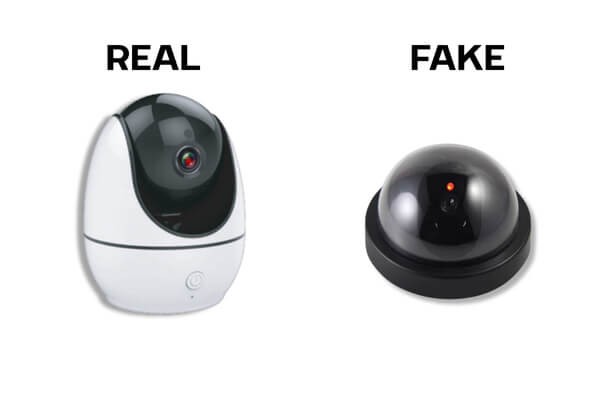
- Made from high-quality materials such as aluminum or engineering-grade plastic, real security cameras feel solid and durable.
- They have precise, well-sealed seams and come with weatherproof ratings like IP65 or IP66, which ensure they can withstand outdoor conditions.
Fake Cameras:
- Typically made from cheap plastic that feels light and flimsy.
- Fake cameras often lack protection from the elements and may deteriorate quickly when exposed to weather.
Pro Tip: If you’re looking for a robust and reliable solution, consider the Commercial Vision Duo from RusinVision, built with sturdy materials and an IP66 rating, perfect for both outdoor and commercial settings. Whether it’s monitoring the exterior of your business or securing a storefront, this camera provides crystal-clear video and lasting durability.
Where and How Cameras Are Installed: A Quick Clue
Real Cameras:
- Can be installed in a variety of environments, both indoor and outdoor, including exposed areas where they are subject to the elements.
- Wiring is typically concealed, or if visible, the cables are thick and heavy-duty, providing both power and data transmission.
Fake Cameras:
- Often placed in sheltered or indoor locations to protect them from the elements.
- May use fake or very thin wires, often without any actual connection to a power source.
Pro Tip: RusinVision’s Wildlife Vision Endurance is a great example of a camera built for challenging outdoor environments, equipped with solar power and designed to endure harsh weather conditions. If you're using it for outdoor monitoring or wildlife surveillance, this camera offers the perfect balance of durability and energy efficiency.
The Design Details: How Camera Models Differ
Real Cameras:
- Available in a variety of designs, including dome, bullet, PTZ (pan-tilt-zoom), and wireless models. Some real cameras have unique features such as magnetic mounts, removable batteries, or high-tech lenses.
Fake Cameras:
- Often imitate common designs, such as bullet or dome shapes, but lack the variety and advanced functionality of real cameras.
- Fake models may also have generic or overly simplistic designs.
Pro Tip: The Commercial Vision Trio series by RusinVision offers high-definition cameras with multiple lenses and advanced zoom functionality, ideal for commercial surveillance where quality and flexibility are essential. This camera is perfect for businesses that require multi-angle views, ensuring every corner is covered.
Look for Branding: The Easiest Way to Tell
Real Cameras:
- Authentic cameras usually have visible branding, model numbers, and certification labels. This information is often engraved or printed directly on the camera’s body.
- Reputable brands like Nest, Arlo, and Hikvision ensure authenticity and provide the necessary support for product verification.
Fake Cameras:
- Often lack any visible branding or have fake logos that don’t match any real company.
- The markings may be poorly applied or simply stickers that can be easily removed.
Pro Tip: RusinVision cameras, such as the Commercial Vision Core, are proudly branded and provide full technical support for verification, ensuring your investment is protected. With a reliable brand name like RusinVision, you can be confident that you're receiving top-tier security solutions that meet your specific needs.
Testing Motion Tracking: Is the Camera Real?
Real Cameras:
- If the camera has pan-tilt-zoom (PTZ) capabilities, it will move smoothly and precisely to follow people or vehicles.
- Motion sensors trigger recording and alerts, ensuring that you can monitor events in real-time.
Fake Cameras:
- Fake cameras with motion sensors may simply rotate back and forth in a pattern without reacting to actual movement.
- They may not have the capability to record, or the movement might appear exaggerated and unrealistic.
Pro Tip: If you are using RusinVision's Commercial Vision Duo Pro, this camera offers precise motion tracking, which means you won’t just be recording footage – you'll also receive real-time alerts, ensuring you're aware of any suspicious activity as it happens.
Smart Features: The Key to Real Surveillance
Real Cameras:
- Real cameras offer advanced features such as remote monitoring, two-way audio, human detection, night vision, and cloud or SD card storage.
- They can be integrated into smart home systems for seamless control and alerts.
Fake Cameras:
- Fake cameras have no actual surveillance capability and often only have a simple LED light or a motion-sensor gimmick.
- They cannot store footage or send notifications.
Pro Tip: RusinVision’s Home Vision Ultra series provides not only HD video capture but also integrates smart features such as remote viewing, motion detection alerts, and two-way audio. If you want a camera that keeps your family and home safe, this series offers comprehensive coverage, even when you’re miles away.
Choosing the Best Camera: Real vs. Fake
When to Choose Real Security Cameras:
- If you need actual monitoring, evidence collection, and remote viewing, real security cameras are your best option.
- Real cameras provide advanced features like night vision, AI detection, and integration with smart home systems, ensuring complete protection for your home or business.
When to Choose Fake Security Cameras:
- If you are working with a tight budget or need temporary deterrence, fake cameras may be useful.
- They work best when paired with real cameras in secondary areas to create the illusion of complete surveillance.
Pro Tip: For maximum security and peace of mind, a hybrid approach works best. Use real cameras in high-risk areas (entrances, high-value zones) and supplement with fake cameras in lower-risk areas for additional visual deterrence.
FAQ
Are fake security cameras legal?
Fake security cameras are generally legal in businesses and homes as a deterrent. However, ensure compliance with privacy regulations and avoid creating a false sense of security.
How can I check if a camera is recording?
You can check the camera’s indicator light, verify the status using an app, or check storage to ensure footage is being recorded.
Do wireless cameras work well for home security?
Yes, wireless cameras like Home Vision Pro from RusinVision offer easy installation, high-quality video, and smart features, making them ideal for home security.
What does a red dot on a security camera mean?
A red dot on a security camera typically indicates that it is in use or recording. In modern cameras, this light is usually an infrared LED that’s barely visible to the naked eye.
What are common signs of hidden cameras?
Hidden cameras may be disguised as everyday objects, have small lenses, or use infrared lights for night vision. They may also be placed in inconspicuous spots.
Does the blue light on the camera mean someone is watching?
A blue light on a camera typically indicates it is powered on or in active recording mode. It does not necessarily mean someone is actively monitoring the footage.
How to know if a camera is a dummy?
A dummy camera may lack a functional lens or infrared lights, and often uses flashing red lights as a visual deterrent. It may also feel light and flimsy.
What is the black dot on a camera?
A black dot on a camera lens usually indicates an infrared (IR) sensor for night vision. It helps the camera capture footage in low-light conditions.
Can a cell phone detect a hidden camera?
Yes, a cell phone can detect hidden cameras using specialized apps that identify infrared light or magnetic fields emitted by cameras.
How can you tell if a camera is watching you?
You can check if a camera has visible IR lights or blinking indicators when it's in use. Additionally, some cameras have motion sensors that track movement.
Is spying on your neighbors illegal?
Spying on your neighbors without consent is illegal in many jurisdictions. It can violate privacy laws, so it’s important to respect others’ privacy and follow local regulations.
Conclusion: The Importance of Choosing Real Security Cameras
While fake security cameras may provide some level of deterrence, they can’t replace the comprehensive protection offered by real cameras. Investing in real security solutions from trusted providers like RusinVision ensures that you get reliable monitoring, evidence collection, and peace of mind.
When selecting a camera system for your home or business, it’s crucial to understand the differences between real and fake cameras. Choosing a quality camera system not only protects your assets but also contributes to your overall security strategy.